
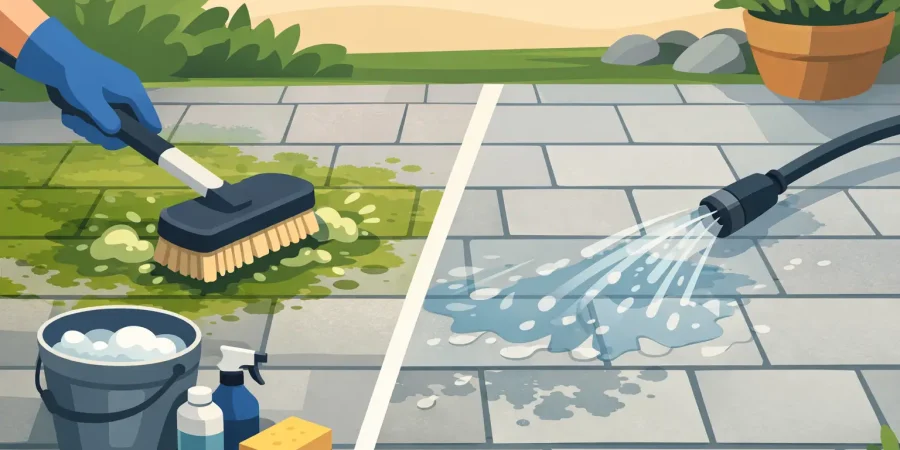
That green film on paving is not just making the surface look tired. It is often the first sign that a patio, path or driveway is becoming slippery underfoot. If you are wondering how to remove algae from paving, the real goal is not simply to brighten the slabs for a few days. It is to get the surface properly cleaned, safer to use and less likely to turn green again as soon as the weather changes.
Across the South Coast, algae thrives in exactly the places you would expect – shaded patios, damp paths, north-facing walls and paving that stays wet after rain. It builds up gradually, so many property owners only notice it once the surface starts looking dull, patchy or greasy. By that stage, a quick rinse with a hose is rarely enough.
Why algae on paving needs dealing with properly
Algae is more than a cosmetic issue. On natural stone, concrete slabs, block paving and decorative pathways, it creates a slick layer that can make the surface hazardous, especially in autumn and winter. For landlords, business owners and anyone responsible for shared outdoor areas, that matters for obvious reasons.
It also affects the overall appearance of the property. Clean paving can lift a whole garden, frontage or entrance area. Algae does the opposite. It makes well-laid surfaces look older than they are and can hide the original colour and finish beneath.
There is also the question of what happens if it is left alone. Algae often appears alongside moss, ingrained dirt and early organic growth in joints and edges. The longer it sits, the more stubborn the surface becomes to clean. In some cases, trapped moisture can contribute to further deterioration, particularly where pointing, jointing or sanded block paving is already starting to weaken.
How to remove algae from paving without damaging it
The right method depends on the type of paving, the level of growth and the condition of the surface underneath. That is why there is no single fix that suits every patio or driveway.
For light surface growth, professional pressure washing can remove built-up algae, grime and residue very effectively. Done properly, it strips away the slippery film and reveals a much cleaner finish beneath. On more durable surfaces, this can produce a strong before-and-after result quite quickly.
That said, more pressure is not always better. Some paving responds well to controlled washing, while older slabs, softer stone or already weathered joints need a more careful approach. Too much force can mark the surface, dislodge pointing or remove jointing sand from block paving. A proper clean should improve the paving, not leave it needing repair afterwards.
In areas where algae is persistent or deeply rooted, soft washing treatments may be the better option. These are designed to deal with organic growth more thoroughly and can keep regrowth under control for longer. It is often the best route for delicate surfaces, shaded areas and places where a surface-level wash would only provide a short-lived result.
Why algae keeps coming back
One of the biggest frustrations for property owners is cleaning a patio only to see the green return not long after. That usually comes down to conditions rather than poor effort.
Algae likes moisture, shade and limited airflow. If trees overhang the area, if gutters are overflowing, or if the paving sits in a part of the garden that rarely gets direct sun, regrowth is far more likely. Poor drainage can make matters worse, as can damp soil or planting beds alongside the paved area.
This is why proper treatment matters. Removing visible algae is one part of the job. Reducing the conditions that help it return is the other. Sometimes that means clearing drainage channels, cutting back nearby growth or addressing water run-off. Sometimes it means using the right treatment after cleaning rather than relying on washing alone.
The difference between a quick clean and a proper result
A lot of paving can be made to look better temporarily. The harder part is getting it properly restored.
A quick surface wash may take off loose dirt and some green staining, but if the organic growth is still embedded in the pores of the paving or lingering in the joints, the clean will not last. That is why some patios look fresh for a week and then slowly start going green again.
A more complete service usually involves assessing the surface first, choosing the right cleaning method and finishing the job properly. On block paving, that may include re-sanding once the area is clean and dry. On some surfaces, sealing may also help reduce water absorption and make future maintenance easier. It depends on the paving type, its age and how heavily exposed it is to weather and foot traffic.
For commercial premises, communal spaces and rental properties, that longer-lasting result is usually the priority. Cleaner paving looks better, but it also reduces complaints, improves presentation and helps keep access routes safer.
How to remove algae from paving in different areas
Not all paved areas behave the same way. A rear garden patio may suffer from barbecue grease, leaf staining and damp corners. A front path may green up because it gets no sun and catches run-off from nearby planting. A driveway may have algae mixed with oil marks, tyre residue and compacted dirt.
That is why a one-size-fits-all cleaning approach often falls short. Concrete paving can usually handle a firmer wash than softer natural stone. Block paving often needs attention to the joints after cleaning. Porcelain is less porous but still develops slippery film and staining if neglected. Each surface needs the method to fit the material.
The same goes for the level of growth. Light seasonal algae is one thing. Thick green staining, black spotting and heavy moss build-up is another. The more advanced the problem, the more important it is to use the right treatment rather than trying to blast everything off in one go.
What professional cleaning does better
The main advantage of professional exterior cleaning is not simply equipment. It is knowing how to get a strong result without causing avoidable damage.
That means adjusting pressure, selecting appropriate treatments and recognising when a surface needs a softer wash rather than aggressive cleaning. It also means spotting related issues that affect the finish, such as blocked gutters dripping onto paving, disturbed joints, poor drainage or surrounding dirt that will quickly wash back onto the area.
For many homeowners and property managers, the appeal is straightforward. They want the space cleaned properly, with fair pricing, minimal hassle and a visible improvement they can actually see from the moment the job is done. That is exactly where a specialist service earns its keep.
South Coast Patio Care works with this kind of problem every day – tired paving, slippery patios and outdoor surfaces that need proper attention rather than a temporary rinse. The aim is always the same: cleaner, safer, looking like new.
Keeping paving cleaner for longer
Once algae has been removed, maintenance becomes much easier. Surfaces stay in better condition when they are cleaned before the build-up becomes heavy again.
Simple things make a difference. Keeping gutters clear helps reduce constant dripping onto paths and patios. Trimming back overhanging shrubs allows more light and airflow onto the surface. Brushing away leaves and debris stops damp organic matter sitting on the paving for long periods.
For some properties, periodic professional cleaning is the most practical option. This is especially true for shaded gardens, rental homes, managed blocks, cafés with outdoor space and commercial entrances where appearance and slip resistance matter throughout the year. A regular maintenance plan often works out better than waiting until the paving is badly discoloured and hazardous again.
There is also a cost trade-off worth noting. A heavily neglected surface often takes more time and treatment to restore than one that is cleaned and maintained at sensible intervals. Looking after paving early is usually the more cost-effective route.
When it is time to get it sorted
If the paving feels slick, looks green after rain, or is dragging down the look of the property, it is usually time to act. The same applies if you are preparing for viewings, welcoming customers, getting a rental property ready or simply want outdoor areas to look cared for again.
The best results come from treating the cause as well as the symptom. That means cleaning the algae away properly, protecting the surface where appropriate and tackling the damp, shade or drainage issues helping it return.
A clean paved area does more than improve appearances. It makes the space feel looked after, safer to walk on and easier to maintain going forward. Sometimes the biggest improvement outside a property is not a new surface at all – it is restoring the one already there and finishing the job properly.