
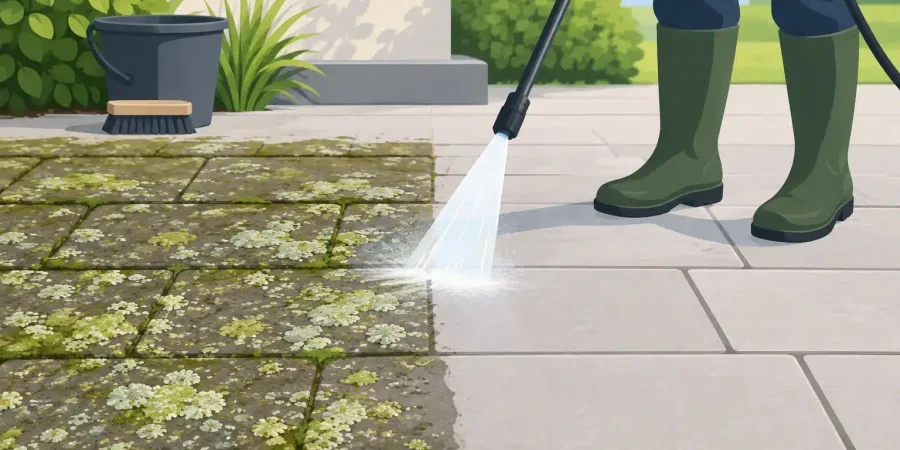
Lichen is not just a surface stain that disappears with a quick rinse. Those pale green, grey or black crusty patches attach themselves firmly to paving, especially on shaded patios, paths and driveways that stay damp. If you are asking what removes lichen from paving, the short answer is the right biocidal treatment followed by careful cleaning – not simply more pressure.
Left alone, lichen makes paving look tired and can contribute to a slippery surface in wet weather. It also tends to grow in the same conditions that encourage moss and algae, so dealing with it properly can make a real difference to how safe and well-kept an outdoor area feels.
What removes lichen from paving?
A professional-grade biocide or specialist exterior-cleaning treatment is normally the most effective way to remove lichen from paving. The treatment breaks down the organic growth and loosens its hold on the surface. Once it has had sufficient time to work, the paving can be cleaned using a controlled pressure wash or, where appropriate, a softer wash method.
The best approach depends on the paving itself. Concrete slabs, block paving, porcelain, natural stone and tarmac all react differently to water pressure and cleaning products. That is why a one-size-fits-all solution can cause more problems than it solves.
For well-established lichen, particularly the hard, flat patches that appear almost painted onto the paving, pressure washing alone often gives a disappointing result. It may strip away the visible top layer while leaving spores and staining behind. The lichen can then return sooner than expected, especially in damp corners beneath trees, beside fences or on north-facing surfaces.
A suitable treatment tackles the growth at the root. Cleaning then removes the residue and restores the original appearance of the paving as far as the material allows.
Why pressure washing alone is not always enough
Pressure washing has a valuable place in patio and driveway cleaning, but it needs to be used properly. A powerful jet can lift surface grime, moss and loose lichen quickly. Used too aggressively, however, it can damage older slabs, etch softer stone, scour concrete and wash sand out from between block paving.
That is particularly relevant with block paving. Removing jointing sand leaves blocks less secure and creates gaps where weeds, moss and new lichen can establish themselves. A proper block paving clean should include resanding the joints afterwards, once the surface is dry. This helps lock the blocks back together and gives the driveway or path a finished appearance.
The same caution applies to natural stone. Sandstone, limestone and some decorative slabs can be more porous or delicate than they look. Too much pressure can roughen the face of the stone, making it more likely to hold dirt and organic growth in future. In those cases, a lower-pressure clean paired with the right treatment is usually the safer route.
The treatment needs to suit the surface
There is no benefit in using harsh chemicals simply because the lichen is stubborn. Strong acidic cleaners can damage certain paving materials, affect nearby planting and leave unwanted marks. Household bleach is also a poor substitute for a planned exterior-cleaning treatment. It can discolour surfaces, harm lawns and borders if it runs off, and may not provide an even or lasting result.
A professional cleaner will assess the material, its condition and the level of growth before choosing a method. On many patios and driveways, this means applying a purpose-made biocide, allowing an appropriate dwell time, then cleaning the surface with controlled equipment. Any run-off needs managing carefully, particularly near ponds, flowerbeds, drainage channels and public footpaths.
Porcelain paving often needs a different approach from textured concrete, while old weathered slabs require more care than newer, sound paving. The aim is never to make the surface look artificially new at the cost of damaging it. It is to remove the lichen, lift the built-up dirt and leave the area cleaner, safer and ready to use.
When a soft wash is the better option
Soft washing uses a treatment-based method with low water pressure. It is useful for more delicate paving, walls and surfaces where a high-pressure jet could cause damage. It also works well where the main issue is organic growth rather than ingrained dirt alone.
Because lichen can take time to release fully after treatment, a soft wash may not always produce an instant, dramatic transformation on heavily affected paving. In some cases, the treatment continues working over the following days or weeks as weathering clears the remaining residue. That slower process can be worthwhile if it protects a fragile surface.
When controlled pressure washing is appropriate
For durable concrete patios, sound block paving and many driveways, pressure washing can provide the visible finish customers want. The key word is controlled. The pressure, nozzle, distance and cleaning pattern all matter.
After a suitable pre-treatment, a professional clean can remove dead lichen, moss, algae, soil and general traffic grime far more evenly than a rushed pass with a domestic machine. For block paving, the work should finish with fresh kiln-dried sand brushed into the joints where needed.
How to stop lichen returning so quickly
Even the best clean cannot change the fact that lichen favours damp, shaded conditions. What it can do is reset the surface and make ongoing maintenance easier. Reducing the causes of moisture and debris will help the result last longer.
Keep nearby hedges, overhanging branches and dense planting cut back where practical. This allows more light and air across the paving, helping it dry after rain. Regularly sweep away leaves, soil and plant debris too. A patio that stays covered in wet leaves is an ideal home for organic growth.
Drainage also matters. If water regularly sits in the same area, lichen, algae and moss are likely to keep coming back. Sometimes the issue is as simple as a blocked drain or overflowing gutter sending water across the patio. In other cases, low spots or poor falls in the paving may need attention.
A follow-up biocide treatment can help extend the clean, especially on shaded paths and north-facing patios. It is not a permanent cure, because outdoor paving is exposed to weather all year, but it can slow regrowth and keep surfaces looking cared for between deeper cleans.
Signs it is time to call in a professional
A small patch of early growth may be manageable with a suitable paving treatment and regular brushing. Larger areas are different. If lichen is widespread, the paving is slippery, the surface is delicate, or the driveway is block paved and needs resanding, professional equipment and experience are worth having.
It is also sensible to seek help where there are stained borders, drainage concerns or a mixture of materials. A property may have concrete paths, a sandstone patio and block paving at the front, each needing a slightly different method. Treating every surface the same can leave permanent marks or unnecessary damage.
For homeowners, landlords and property managers, professional cleaning also saves the time spent hiring equipment, moving furniture, managing muddy run-off and trying to correct uneven results. The job should leave the area looking properly refreshed, not half-cleaned with stripes, loose sand and debris left behind.
South Coast Patio Care provides practical patio and driveway cleaning for properties in Seaford, Newhaven, Peacehaven, Eastbourne and Lewes. The focus is straightforward: the right treatment for the surface, careful cleaning and a finish that looks noticeably better.
Lichen is stubborn, but it is not something you have to live with. A properly treated and cleaned patio or driveway can look brighter, feel safer underfoot and give the rest of the property a far better first impression.