
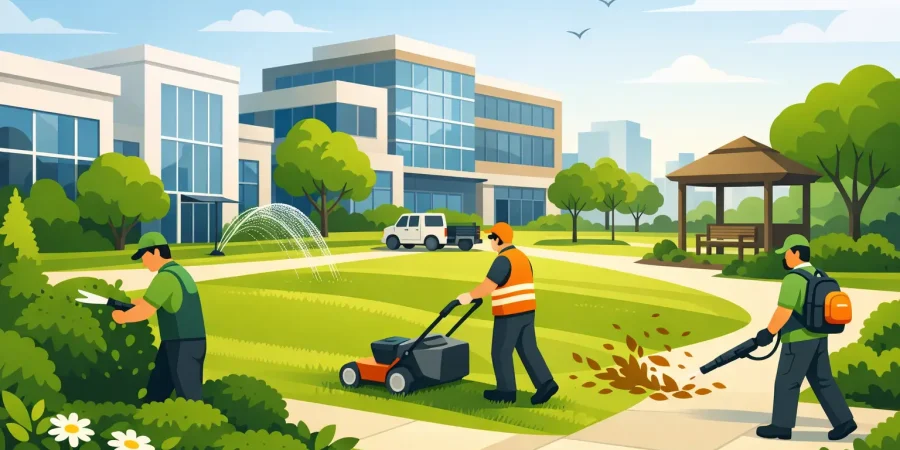
A neglected entrance tells customers, tenants and visitors something before they have stepped through the door. Long grass, weeds around signs, overgrown hedges and slippery paths can make an otherwise well-run property look forgotten. Regular commercial grounds maintenance keeps those small problems from becoming a larger, more expensive job.
For shops, offices, managed blocks, holiday lets and other commercial properties, the aim is simple: clean, safe outdoor areas that look cared for every week, not just on the day someone comes to visit. That takes a dependable schedule, proper equipment and a team that finishes the work properly.
What commercial grounds maintenance should cover
The right service depends on the size and use of your site. A compact shop frontage may need lawn cutting, strimming and weed control around paving. A managed residential block may also need hedge cutting, leaf clearance and attention to shared paths, parking areas and bin stores.
At its core, commercial grounds maintenance is ongoing practical care. It is not a one-off tidy-up followed by months of growth. Regular visits keep lawns cut before they become untidy, edges neat, hedges under control and access routes clear.
A well-planned service can include lawn mowing, strimming, hedge cutting, pruning, weed removal and garden clearance. During the autumn and winter, leaf clearance becomes particularly valuable. Wet leaves quickly turn paths and entranceways into a slippery, untidy surface, especially in shaded areas.
The best programme is based on what your property actually needs. Fast-growing lawns and hedges may need more frequent attention through spring and summer, while a lower-maintenance site may only require scheduled visits to keep growth and debris in check. Paying for work that suits the site is better than accepting a vague package that leaves obvious jobs unfinished.
Why regular care makes better business sense
It is easy to put grounds work off until there is a complaint, an inspection or a viewing booked. The trouble is that outdoor areas do not stand still. A missed cut turns into heavy growth, a few weeds spread across paving, and a hedge that needed a light trim becomes a bigger clearance job.
Regular maintenance controls cost as well as appearance. Smaller jobs completed at the right time are usually quicker, cleaner and less disruptive than tackling months of overgrowth in one visit. It also gives property managers and business owners confidence that the outside of the site will not be another item to chase on their already busy list.
There is a safety benefit too. Clear footpaths, cut-back vegetation and well-maintained entrances make it easier for people to move around the property. This matters for customers, staff, residents, deliveries and contractors alike. Grounds maintenance cannot remove every risk, particularly during poor weather, but it helps prevent avoidable hazards from building up.
For landlords and managing agents, the presentation of communal areas can affect tenant satisfaction and prospective viewings. For a customer-facing business, it affects first impressions before anyone sees the service you provide indoors. A neat exterior shows attention to detail without needing to say a word.
A schedule built around the property
There is no single correct visit frequency. It depends on the amount of green space, the type of planting, the season and how visible the area is. A busy premises with a lawn by the main entrance may benefit from regular visits every few weeks during the growing season. A rear courtyard or lightly used communal garden may need a different arrangement.
The practical approach is to agree a recurring plan, then adjust it when seasonal conditions change. Growth accelerates after warm, wet spells. Leaves build up quickly in autumn. Stormy weather can leave branches, debris and blocked access routes that need prompt attention.
A reliable contractor should make this easy. You should not need to repeatedly explain which areas matter, where visitors enter or which parts of a site must stay clear. Once the work is understood, recurring grounds care should be straightforward: the team arrives, completes the agreed work, leaves the area tidy and keeps the property looking maintained.
This consistency is especially useful across Seaford, Newhaven, Peacehaven, Eastbourne and Lewes, where coastal weather can bring windblown debris, damp surfaces and rapid seasonal changes. A grounds plan that looks sensible in July may need more leaf and surface attention by November.
Do not overlook paths, patios and parking areas
Grass and hedges are only part of the picture. Commercial outdoor spaces often include block paving, patios, walkways, steps, walls and entrance areas. When these surfaces are green with algae, stained or covered in moss, they can make a tidy garden look neglected and may become slippery when wet.
This is where exterior cleaning works well alongside routine garden care. Pressure washing can lift built-up dirt from suitable hard surfaces, while soft washing is often the better option for more delicate areas or surfaces where a gentler treatment is needed. The method should always suit the material and condition of the surface, rather than using high pressure everywhere.
After block paving has been cleaned, resanding can help restore stability between the joints where appropriate. Gutter clearing may also be worth arranging where overflowing gutters are creating damp patches, staining or puddles around entrances. These are separate jobs from routine lawn and hedge work, but dealing with them through one trusted local provider keeps outdoor upkeep simpler.
The trade-off is timing. Surface cleaning is best planned around weather, access and the normal operation of the site. A busy café terrace, for example, may need work completed outside trading hours. A shared residential path may require a clear notice period. Good planning protects the result and reduces disruption.
What to expect from a dependable contractor
Commercial clients need more than a person with a mower. They need someone who understands that access, reliability and presentation matter. Turning up when agreed, working respectfully around staff or residents, and leaving paths swept after the job are all part of doing the work properly.
Before work begins, it helps to be clear about the areas included, the intended visit frequency and how additional work will be handled. Hedge reductions, garden clearance, storm debris and deep cleaning can sit outside a standard maintenance visit. Knowing this from the start avoids surprises and makes budgeting easier.
It is also worth choosing a service that focuses on visible results rather than unnecessary complexity. You should be able to look outside after a visit and see the difference: lawns cut, edges controlled, hedges tidied, weeds dealt with and paths left presentable. That is the standard South Coast Patio Care works towards, with fair pricing and regular care that takes the pressure off property owners and managers.
Keep the standard without chasing it
The most useful maintenance arrangement is one that becomes part of how the property is run. Instead of waiting for overgrowth to cause a problem, regular visits keep the outside looking right through the changing seasons. If a patio, driveway or entrance path needs more than a sweep, specialist cleaning can be added when the time is right.
A cared-for exterior gives visitors a better first impression, gives tenants a cleaner shared space and gives you one less job to organise. Set a sensible schedule, keep expectations clear and let regular professional care do what it is meant to do: keep your grounds tidy, safe and ready for the next person through the gate.