
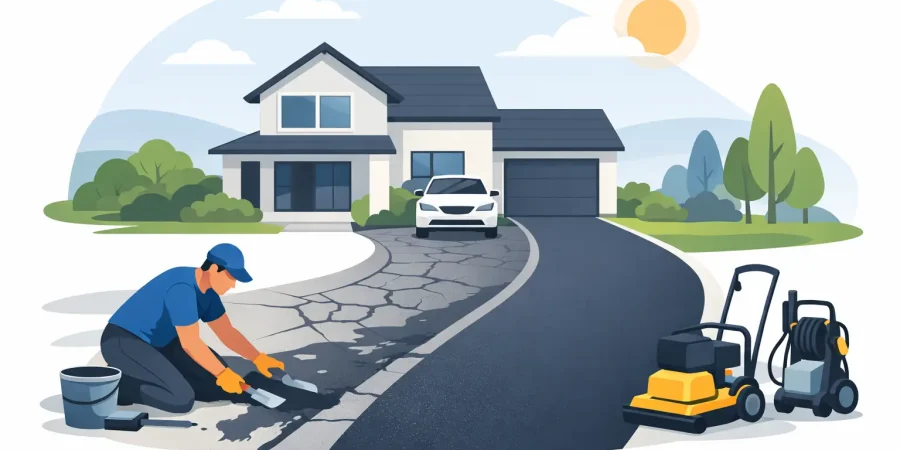
A driveway can make the whole front of a property look cared for – or neglected. When weeds are pushing through joints, algae has made the surface slippery, and stains have settled in, it drags down kerb appeal fast. This driveway restoration guide is for property owners who want to understand what proper restoration involves, what good results look like, and when it makes sense to bring in a specialist rather than settle for a quick surface clean.
Driveways take a lot of punishment on the South Coast. Rain, traffic, fallen leaves, coastal moisture and day-to-day use all leave their mark. The problem is that many surfaces do not fail all at once. They dull gradually, joints empty out slowly, stains deepen over time, and slippery growth builds up in shaded areas until the driveway no longer looks smart or feels safe.
What a proper driveway restoration guide should cover
Restoration is more than blasting dirt away for an hour and calling the job done. A proper result comes from treating the driveway according to the surface type, the level of soiling, and the condition of the joints and edges. The right approach for block paving is not always the right one for concrete, resin-bound areas or natural stone.
The first step is assessment. That means looking at moss, algae, black spot, oil marks, rust staining, tyre wear, efflorescence and any movement in the surface itself. It also means checking drainage, because standing water often causes recurring problems. If the root issue is poor runoff or heavy shade, cleaning alone may improve the appearance without solving the reason the surface keeps deteriorating.
A good contractor will be honest about that. Some driveways come back brilliantly with cleaning, re-sanding and sealing. Others need a more careful conversation because old staining, failed pointing or structural sinking will not disappear through washing alone.
The main stages of driveway restoration
Most successful driveway restoration jobs follow a clear sequence. First comes weed removal and surface preparation. If heavy weed growth is left in place, the clean tends to be patchy and short-lived. Moss and organic matter need dealing with properly before the surface can be restored evenly.
Next comes the cleaning itself. Pressure washing is often the right tool, but technique matters. Too much pressure, held too close, can leave lines, dislodge jointing, damage softer materials or roughen the surface. Too little pressure leaves staining and biological growth behind. On some surfaces, soft washing treatments are also used to tackle organic contamination and help keep regrowth down.
After cleaning, the driveway needs time to dry. That matters most on block paving, where fresh kiln-dried sand is brushed back into the joints once the area is ready. Those joints are not just cosmetic. They help lock the blocks together and support the surface under vehicle traffic. If re-sanding is skipped, the driveway may look cleaner for a few weeks but remain vulnerable to movement, weed return and quicker wear.
Sealing may then be recommended, depending on the surface and the condition of the driveway. A sealant can help improve colour, reduce water penetration, slow down staining and make maintenance easier. But it is not always necessary, and it is not always wise. If moisture is trapped, if the surface has not fully dried, or if the driveway is already in poor structural condition, sealing can cause more frustration than value.
Driveway restoration guide by surface type
Block paving is one of the most common driveway surfaces and one of the most rewarding to restore visually. Dirt collects in the textured face, weeds appear in the joints, and algae can spread quickly in damp spots. Done properly, cleaning and re-sanding can transform it. If appropriate, sealing can also help hold the finish for longer. The trade-off is that block paving needs care during cleaning, because aggressive washing can strip out too much jointing sand.
Concrete driveways often suffer from weather staining, tyre marks, oil spots and general discolouration. Some come up very well with specialist cleaning. Others show every imperfection once the dirt is gone, especially older concrete with surface wear or patch repairs. In those cases, honest expectations matter. Cleaner is achievable. Looking brand new may not be.
Tarmac needs a gentler approach. Harsh pressure and the wrong chemicals can damage the surface or shorten its life. A restoration plan for tarmac is usually more controlled and focused on safe cleaning rather than heavy washing.
Natural stone and decorative finishes also need a bit more judgment. Some stones are more porous, some are more delicate, and some react differently to stain treatments. What works on a standard concrete drive may not be suitable here.
Why driveways deteriorate so quickly
Most people assume a dirty driveway just needs cleaning. Sometimes that is true. But recurring problems usually have a cause. Shade encourages algae. Nearby trees drop debris and stain the surface. Poor drainage allows water to sit. Vehicle drips create oil contamination that sinks deeper over time. Empty joints in block paving let weeds take hold and allow movement under load.
That is why a quick wash from a hired machine often disappoints. It may remove loose grime, but it rarely deals with the full picture. The result can look better for a short while, then slip back quickly because the underlying causes were left alone.
For landlords and property managers, that short-term approach can become expensive. Repeated light cleaning without proper restoration often means more frequent callouts, faster surface decline and poorer presentation between tenancies. For homeowners, it usually means spending money twice.
When professional restoration is worth it
If the driveway is large, heavily stained, unevenly weathered or noticeably slippery, professional restoration is usually the more sensible route. The same applies if the surface is block paving that needs re-sanding, or if you are considering sealing afterwards. The margin for error is wider than many people expect.
Professional equipment makes a difference, but so does experience. Knowing how to clean without scarring the surface, how to treat stubborn staining, how long to leave a driveway to dry before re-sanding, and whether sealing is genuinely appropriate – that is what separates a proper restoration from a rushed tidy-up.
There is also the practical side. A driveway restoration job can be messy, time-consuming and physically hard going. Most customers are not looking for a weekend project. They want the job handled properly, with fair quoting, clear expectations and a visible end result.
What to expect from a quality driveway restoration service
A good service should start with a straightforward assessment and a clear quote. You should know what is being cleaned, whether weeds or moss are included, whether re-sanding forms part of the work, and whether stain treatment or sealing is advised. If parts of the staining are unlikely to come out fully, that should be explained upfront.
Workmanship shows in the finish. The cleaned surface should look even, not striped. Jointing should be properly reinstated where needed. Edges should be finished neatly. Waste and mess should be kept under control. Most importantly, the driveway should not just look brighter on the day – it should feel safer underfoot and present better as part of the property.
For many customers across the South Coast, that visible improvement is the main reason to book. Cleaner. Safer. Looking close to new again. That is what a well-restored driveway should deliver.
Keeping results for longer after restoration
Once a driveway has been restored, a bit of ongoing care helps protect the result. That does not mean constant maintenance. Usually it means dealing with weeds early, sweeping away leaf build-up, keeping drainage points clear and arranging periodic cleaning before heavy staining and algae become established again.
The right maintenance schedule depends on the setting. A shaded driveway under trees may need attention sooner than an open, sunlit one. A rental property with frequent vehicle turnover may show marks more quickly than a lightly used private drive. It depends on use, surface type and exposure.
If you are investing in restoration, it makes sense to think beyond the first clean. A driveway is one of the hardest-working surfaces around any property. Treat it properly, and it rewards you with a smarter frontage, safer access and a better impression every time someone pulls up outside.
If your driveway has reached the point where brushing, rinsing and hoping for the best no longer touch the problem, that is usually the sign to get it looked at properly. A well-restored surface does more than look cleaner – it makes the whole property feel better kept.