
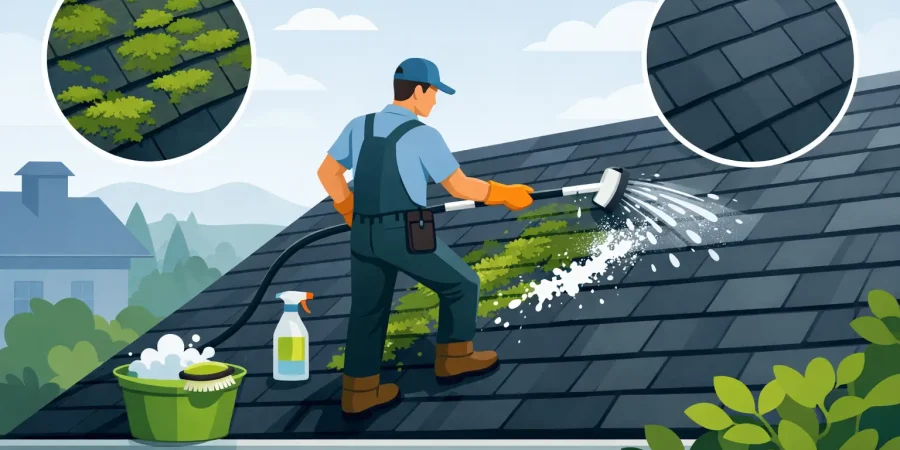
Moss on a patio or driveway can make a tidy property look neglected very quickly, but the bigger issue is safety. Once it holds moisture, the surface stays slippery for longer, joints start to weaken, and what looked like a small green patch can spread across paving, walls and steps. If you are wondering how to remove moss safely, the right answer is not simply to blast it with the highest pressure possible.
Why moss needs a careful approach
Moss thrives where surfaces stay damp, shaded and slow to dry. That is why it often builds up on north-facing patios, older paths, block paving, brick walls and areas near overgrown borders or clogged gutters. The growth itself may look soft, but the damage it contributes to is not. Moss traps moisture against the surface, which can encourage staining, joint erosion and frost-related wear over time.
The mistake many property owners make is treating every surface the same. Concrete flags, natural stone, block paving, tarmac and brick all respond differently to cleaning. A method that works on one may mark, loosen or wear another. Safe moss removal is really about matching the treatment to the surface, the level of growth and the condition underneath.
How to remove moss safely from outdoor surfaces
The safest method starts with assessment, not cleaning. Before any treatment begins, it helps to check how thick the moss is, whether the surface is already loose or cracked, and where the moisture is coming from. If the root cause is poor drainage, nearby plant overgrowth or constantly overflowing gutters, moss will return quickly unless that is dealt with too.
For light moss growth, manual removal is often the safest first step. A stiff brush can lift the bulk of the moss from paving or joints without putting the surface under unnecessary stress. This is especially useful on older patios, weathered pointing or delicate stone where aggressive cleaning can do more harm than good. Scraping tools may also be used carefully, but only where joints and edges are sound.
For heavier coverage, a professional soft wash treatment is often the better option. This works by applying an appropriate cleaning solution that breaks down the moss and organic growth, rather than relying on force alone. It is a more controlled process and it helps treat spores that brushing by itself leaves behind. The result is usually a cleaner finish and a longer-lasting one.
Pressure washing can still play a part, but it needs to be done properly. Used at the wrong setting or angle, it can scar stone, strip mortar joints, dislodge block paving sand and leave surfaces rougher than before. Rougher surfaces hold dirt and moisture more easily, which means fresh moss can come back sooner. Safe pressure washing is about the correct nozzle, distance, water pressure and technique, not just power.
Where DIY moss removal often goes wrong
The biggest issue with DIY moss removal is overdoing it. People often assume that if a bit of pressure works, more will work better. On paving and walls, that can lead to etched surfaces, blown joints and damaged edges. On steps and paths, it can create uneven wear that affects appearance and slip resistance.
The second problem is using the wrong chemical product. Some off-the-shelf treatments are too harsh for certain materials, while others are applied too heavily and run into lawns, borders or drains. A moss treatment should be suitable for the surface and used with care around surrounding areas. Safe removal is not just about the paving itself. It is also about protecting nearby plants, pets and drainage points.
Timing matters as well. Moss removal on a freezing day, during very wet weather or just before heavy rain is rarely ideal. Treatments may not work as intended, surfaces can stay slippery during the process, and rinse-off can become harder to control. Dry, mild conditions usually give the best and safest results.
The safest method depends on the surface
Patios and paving
Patios are one of the most common areas for moss build-up because they stay shaded by fences, walls and planting. On stone or concrete slabs, the safest route is usually a combination of physical removal, controlled washing and a follow-up treatment to deal with regrowth. If the pointing is already weak, high pressure should be avoided or used very carefully. Once cleaned, any damaged joints should be repaired so water does not keep sitting where moss can take hold again.
Block paving
Block paving needs extra care because the kiln-dried sand between the blocks is part of what keeps the surface stable. Heavy washing can remove that sand, leading to movement and open joints. Moss often roots into those joints, so a careful clean followed by re-sanding is usually the proper finish. Without that final step, the surface may look better for a short while but be left more vulnerable.
Walls and steps
Moss on walls is often a sign of constant shade or trapped moisture. Vertical surfaces can usually be treated more gently than horizontal ones, but the surrounding area still needs protection from runoff. Steps need particular attention because even a small amount of leftover moss can remain slippery. Safe removal here means not just making them look clean, but making sure they are genuinely safer to use afterwards.
Tarmac and delicate surfaces
Tarmac should never be treated like hard stone. Too much pressure can gouge or strip the surface, leaving permanent damage. Some decorative stone and older brickwork can also be marked if cleaned too aggressively. This is where experience matters most. A surface may look tough, but that does not mean it should be cleaned harshly.
Preventing moss from coming back
If you only remove the visible growth, moss often returns sooner than expected. The lasting improvement comes from reducing the conditions that help it thrive. Trimming back overhanging plants can let surfaces dry faster. Clearing gutters and drainage channels can stop water spilling onto walls and paving. Regular sweeping removes the debris that holds moisture and feeds organic growth.
On some surfaces, sealing may also help after cleaning and drying, especially where the material is porous and prone to repeated staining or regrowth. It is not right for every surface, and it should never be applied as a shortcut over dirt or moisture, but in the right setting it can support easier maintenance and a smarter finish.
This is often where professional care saves time and repeat cost. A proper clean, the right treatment and any necessary finishing work usually last better than repeated quick fixes.
When it is better to call in a professional
If moss covers a large area, keeps returning, or sits on a fragile or expensive surface, it is usually worth getting it dealt with properly. The same applies if the area has become slippery enough to pose a risk to residents, tenants, customers or visitors. What starts as a cleaning issue can become a maintenance issue very quickly when surfaces are left damp, unstable or unsafe.
A professional service should assess the surface first, explain the method being used and avoid one-size-fits-all cleaning. That matters on mixed outdoor areas where you may have paving, walls, edging, drains and planting close together. The goal should be visible improvement without unnecessary damage, mess or disruption.
For property owners across places like Seaford, Newhaven, Peacehaven, Eastbourne and Lewes, that usually means looking for a local contractor who understands the effect coastal weather, shade and year-round damp conditions can have on outdoor surfaces. South Coast Patio Care approaches moss removal with that practical mindset – cleaner surfaces, safer footing and a finish that is done properly.
If moss is starting to spread, the best time to deal with it is before the surface becomes slippery, stained and harder to restore. Safe removal is not about using more force. It is about using the right method so the area ends up cleaner, safer and looking like it should again.