
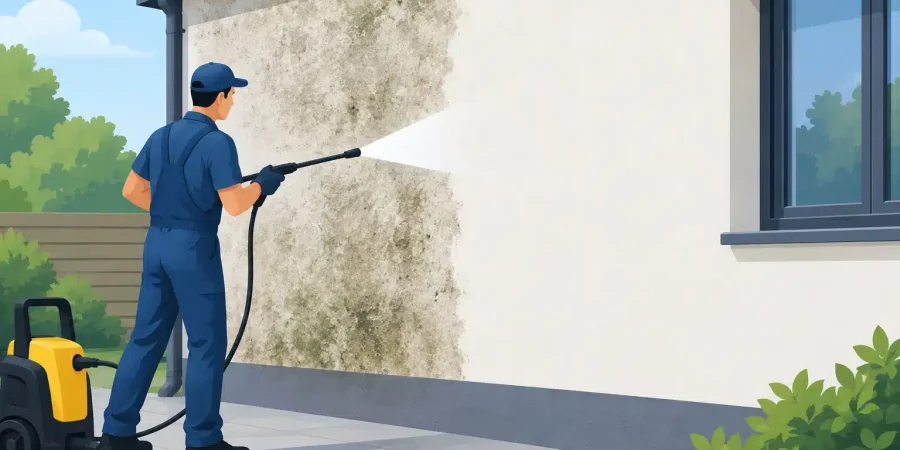
A clean patio and tidy garden can still be let down by stained exterior walls. Green algae, black streaks, rust marks and traffic grime make render look older than it is, particularly on properties exposed to coastal weather. A professional render stain removal service restores the appearance of those walls without taking risks with the finish underneath.
At South Coast Patio Care, the aim is straightforward: cleaner walls, treated properly, with a result that lasts. Render needs a more considered approach than a driveway or block paving. High pressure in the wrong hands can scar the surface, force water behind weak areas and leave obvious patchy marks. The right treatment depends on the stain, the render type and the condition of the wall.
Why render becomes stained
Render is exposed all year to rain, shade, wind and airborne dirt. On the South Coast, damp weather and salt in the air can make staining build up quickly, especially on north-facing walls, garden boundaries and areas beneath gutters.
Green staining is usually algae, moss or lichen. It thrives where a wall stays damp and receives little direct sunlight. Black streaks may be mould, accumulated grime or water running repeatedly from a blocked gutter, overflowing hopper or damaged downpipe. Rust stains often come from metal fixtures, railings or fixings reacting with rainwater.
Some marks are surface-level and respond well to a carefully applied cleaning treatment. Others point to an underlying issue, such as a leaking gutter or cracked render. Cleaning the wall is still worthwhile, but the cause should be dealt with too. Otherwise, the staining can return sooner than it should.
Our render stain removal service: the right approach
Render is not a surface for aggressive pressure washing. While a powerful jet may remove visible dirt quickly, it can also erode a delicate finish, blow out weak joints and leave the wall looking worse once it dries. A professional clean should improve the wall, not create a repair job.
Our render stain removal service starts by checking the wall closely. We look at the type of staining, how widespread it is, whether the render is sound and whether there are nearby windows, plants, paths or painted features that need protecting.
For most rendered walls, a controlled soft-wash treatment is the sensible choice. A suitable cleaning solution is applied at low pressure to break down organic growth and lift weather staining. After allowing the treatment to work, the wall is rinsed carefully where appropriate. The process is measured rather than rushed, helping to protect the texture and colour of the render.
Rust and other stubborn marks may need a more targeted treatment. This is where experience matters. One product will not suit every stain, and using the wrong cleaner can bleach, etch or discolour the surface. We choose the treatment around the problem rather than treating every wall in the same way.
What a proper clean can remove
A specialist render clean can greatly improve algae, moss, lichen, general dirt, black weather streaks, water marks and many rust stains. It can brighten rendered garden walls, house fronts, extensions, garages and commercial premises that have started to look neglected.
The final result depends on the age and condition of the render. Deep staining, old paint failure, cracks and permanent discolouration will not always disappear completely. Honest advice matters here. If a wall needs repair or repainting, cleaning can still provide a major improvement, but it should not be presented as a cure for damage beneath the surface.
Why soft washing is safer than blasting render
Pressure washing has its place. It is highly effective on robust surfaces such as patios, driveways and block paving when carried out correctly. Render is different. Its finish can be textured, coloured through or painted, and it may have fine cracks that are not obvious until water is pushed into them.
Soft washing works by treating the biological growth instead of simply stripping it from the surface. That means the clean reaches into the tiny pits and texture where algae hold on. The wall is cleaned at a safer pressure and the regrowth cycle is usually slowed down.
There is a trade-off. Soft washing may take longer to show its full effect than a hard blast, particularly where heavy lichen is present. Some treated growth can lighten gradually over the following days. The benefit is a more careful process that respects the material and targets the cause of the staining.
When to arrange render cleaning
The best time to book is when staining first becomes noticeable, rather than waiting until a wall is heavily green or black. Early treatment is generally easier, gives a more even result and helps a property continue to look looked after.
It is also worth arranging a clean before putting a property on the market, welcoming new tenants or reopening a customer-facing premises after winter. Clean exterior walls make a strong first impression alongside a freshly maintained garden, clear gutters and a restored patio or driveway.
For landlords and property managers, render cleaning can form part of planned external upkeep between tenancies or as part of regular site maintenance. It is a practical way to protect kerb appeal without committing to unnecessary decorating work.
Signs the wall needs more than cleaning
A clean is not the answer to every render problem. If you can see loose sections, spreading cracks, bubbling paint, damp patches inside the property or staining that reappears quickly from one point, further investigation is sensible.
Gutters deserve particular attention. A small overflow can repeatedly soak the same area of wall and create a long black stain beneath the roofline. Clearing the gutter and checking the downpipe route can prevent the problem returning. This is why exterior care works best when the whole property is considered, not just the visible mark.
We will always flag obvious concerns before treatment. It is better to be clear about what cleaning can achieve and what may need a separate repair than to promise an unrealistic finish.
Keeping rendered walls cleaner for longer
After a professional clean, a few simple maintenance decisions help protect the result. Keep shrubs and climbers cut back so air can move around the wall. Dense planting holds moisture against render and blocks sunlight, giving algae the damp conditions it likes.
Make sure gutters, downpipes and drain outlets are flowing freely. Avoid leaning soil, compost bags or garden items against the wall, as they can trap moisture and leave stains. If a wall is close to overhanging trees, regular garden maintenance can reduce leaf build-up in gutters and limit the shade that encourages green growth.
There is no fixed timetable for every property. A bright, open wall may stay clean for several years, while a shaded side passage or coastal-facing elevation may need attention more often. The condition of the wall, its aspect and nearby vegetation all make a difference.
A cleaner finish, without the guesswork
Exterior walls are one of the largest visible parts of a property, yet they are easy to overlook until staining becomes hard to ignore. Choosing a careful render stain removal service protects the finish, improves kerb appeal and removes the need to experiment with harsh products or hired equipment.
Whether it is a green-rendered garden wall in Seaford, weather marks on a rental property or a stained frontage that needs to look presentable again, the right treatment can make a clear difference. A proper assessment is the best first step – because clean render should look refreshed, not just temporarily washed.