
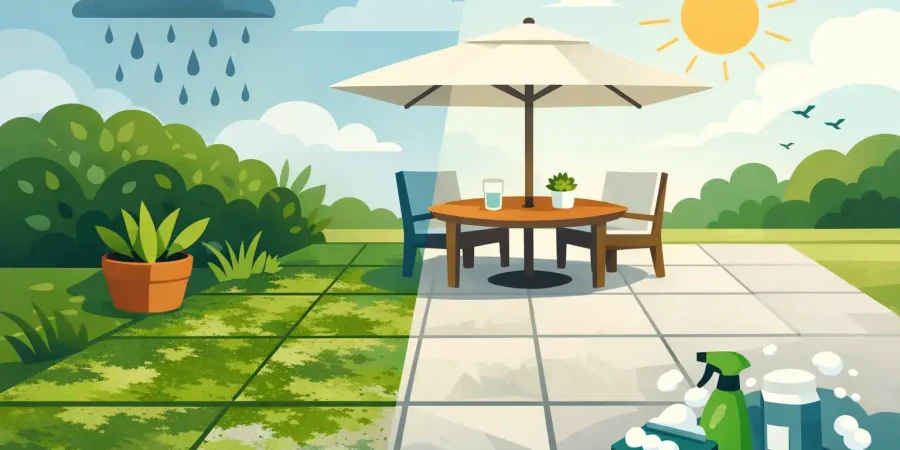
A patio can look smart when it is first laid, then slowly take on a green film around the edges, in the joints and across the shaded areas. If you are asking, “why is my patio turning green?”, the usual answer is moisture feeding algae, moss or lichen on the surface. It is common across the South Coast, particularly after wet weather, but it should not be ignored. Green paving can become slippery, tired-looking and harder to restore if left for too long.
Why Is My Patio Turning Green?
The green growth is usually algae. These tiny organisms thrive where there is dampness, shade and limited air movement. They can settle on almost any outdoor surface, including concrete slabs, block paving, natural stone, porcelain and decking. A patio does not have to look neglected for algae to appear either. Even a regularly swept area can turn green if the conditions are right.
Moss is another common cause. It tends to grow in damp joints, cracks and porous surfaces where soil, leaves and debris have built up. Lichen may also appear as pale green, grey or white patches that cling more firmly to the paving. Although these growths are different, they share the same basic cause: a surface that stays wet long enough for nature to take hold.
In coastal parts of East Sussex, frequent rain, mild temperatures and salt-laden air can all add to the problem. Patios beneath trees, beside fences or against north-facing walls are often affected first because they receive less direct sunlight and take longer to dry.
The Conditions That Encourage Green Growth
A green patio is rarely caused by one thing alone. It is normally the result of several small issues working together over time.
Shade and slow drying
Sunlight helps paving dry quickly after rain. Where a patio is shaded by overhanging trees, a tall hedge, a wall or the house itself, water can sit on the surface for hours or days. That lingering moisture gives algae the ideal environment to spread.
This does not mean every shaded patio will stay green. Good drainage and regular cleaning make a real difference. But a north-facing or enclosed area will usually need more frequent attention than a bright, open patio.
Leaves, soil and garden debris
Fallen leaves may seem harmless, but once they become wet they trap moisture against the slabs and break down into organic matter. Soil washed from pots, grass clippings and windblown debris do the same job. They give algae and moss both food and a damp place to establish themselves.
This is why patios beside lawns, flower beds and mature planting often green up more quickly. Keeping the garden tidy is not just about appearance. It also reduces the material that encourages surface growth.
Drainage problems
If puddles remain after rain, drainage needs attention. Water may be collecting because the patio has settled unevenly, joints have become blocked, gullies are full, or the original fall of the paving is not directing water away properly.
Pressure washing can restore the appearance of the surface, but it will not correct standing water caused by a structural issue. In those cases, the best long-term result may involve clearing drainage channels, repairing low spots or improving the route water takes away from the house.
Porous or ageing paving
Concrete and some natural stone surfaces can become more absorbent as they weather. Tiny pores hold water and dirt, allowing algae to return faster after cleaning. Older block paving may also lose jointing sand, creating gaps where moss and weeds can grow.
Porous paving can still be cleaned very effectively, but it needs the right treatment and pressure. Too much force can damage weaker surfaces, strip jointing material or leave an uneven finish. The goal is not simply to blast off the visible green layer. It is to clean the surface properly without shortening the life of the paving.
Is a Green Patio a Safety Problem?
It can be. When algae are wet, they create a slick film that reduces grip underfoot. This is especially noticeable on smooth slabs, steps, sloping paths and areas near doors where people walk in ordinary shoes. The risk rises in autumn and winter, when patios remain damp for longer and fallen leaves hide slippery patches.
For landlords, property managers and small business premises, this is more than a cosmetic concern. A clean, maintained walkway gives tenants, customers and visitors a safer route across the property. At home, it makes everyday use of the garden more comfortable, particularly for children, older relatives and anyone carrying shopping or garden equipment.
A few green marks in a dry corner may not require urgent action. A widespread slimy surface, green steps or paving that feels slippery after rain should be dealt with promptly.
How a Patio Should Be Cleaned
The right cleaning method depends on the material, condition and cause of the staining. For many hard surfaces, professional pressure washing removes built-up dirt, algae, moss and surface grime quickly. A suitable treatment may then be used to deal with remaining organic growth and slow its return.
However, pressure is not the answer to every patio. Delicate stone, older pointing, loose slabs and certain porcelain finishes need a more controlled approach. Soft washing is often better for surfaces where high pressure could cause damage. It uses an appropriate cleaning solution at low pressure to treat organic staining, then allows time for the treatment to work.
The difference matters. An overly aggressive clean can leave marks, dislodge mortar, disturb block paving sand or force water into weak joints. A proper job starts with identifying the surface, testing the right method and rinsing it thoroughly. If block paving is cleaned, resanding the joints afterwards is often necessary to help keep the blocks stable and reduce weed growth.
Household bleach is sometimes used as a quick fix, but it is not always the best option. It can affect nearby plants, run into drains and leave uneven results when used carelessly. It also does nothing to resolve blocked drainage, constant shade or a build-up of debris. For patios close to lawns, beds or ponds, surface cleaning needs particular care.
Keeping Your Patio Cleaner for Longer
A clean patio will eventually attract dirt again, especially in a damp garden. The aim is to slow the return of green growth rather than expect a once-only clean to keep it perfect forever.
Regular sweeping is one of the simplest measures. Removing wet leaves and soil stops them sitting on the paving, while clearing the edges of beds prevents plants from spilling onto the patio. Trim back overhanging hedges and low branches where practical, as a little more light and airflow can noticeably improve drying times.
Check gutters, downpipes and drainage points too. Overflowing gutters can repeatedly soak the same area of patio, while a blocked gully may leave water with nowhere to go. If you notice persistent puddles, it is worth dealing with the cause before arranging a deep clean.
For properties that receive a lot of shade, an annual professional clean is often sensible. Busy family gardens, rental properties and customer-facing premises may benefit from more regular exterior maintenance, particularly before spring and after the autumn leaf fall. The right schedule depends on the location of the patio, the surrounding planting and how quickly it greens up.
When It Is Time to Call in a Professional
A patio covered in algae, moss or black staining can be difficult to bring back with basic equipment. The work is messy, time-consuming and easy to get wrong if the pressure or products are unsuitable for the surface. Professional cleaning provides a more consistent finish and avoids the hassle of hiring machinery, managing dirty runoff and spending a weekend trying to shift stubborn marks.
South Coast Patio Care helps homeowners and property managers in Seaford, Newhaven, Peacehaven, Eastbourne and Lewes restore patios that have become dull, green or slippery. The focus is simple: clean the surface safely, treat the cause where possible and leave the area looking properly cared for.
A green patio is usually a sign that moisture and garden debris have been given too much time to settle. Tackle it early, keep the surrounding area clear and make sure water can drain away. Your patio will be safer underfoot and far more inviting when the next dry day arrives.