
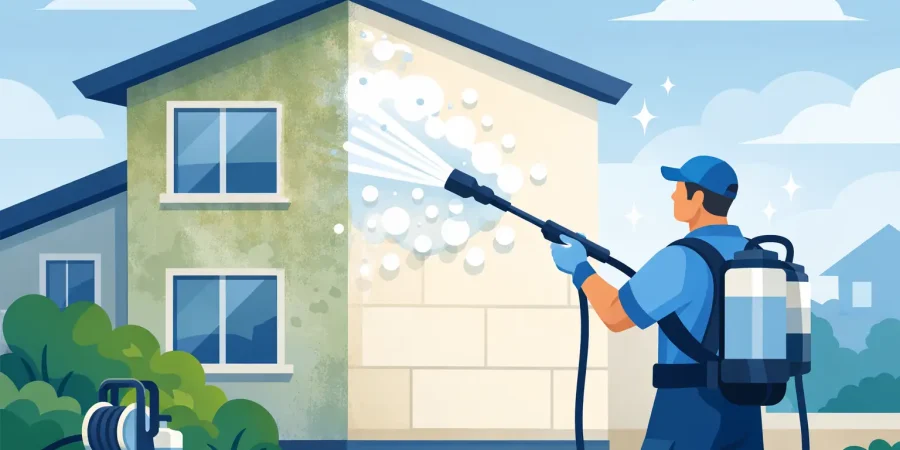
Green streaks on render, dark patches on brick, and that tired look around the front or side of a property usually do not need repainting straight away. In many cases, soft washing exterior walls is the right fix. It deals with the organic growth, traffic film and surface grime that build up over time, while treating the wall far more gently than high-pressure cleaning.
For homeowners, landlords and commercial property managers, that matters. Exterior walls are one of the first things people notice, but they are also easy to overlook until staining becomes obvious. A proper clean can make the whole property look brighter, better kept and closer to new again without the cost and disruption of more invasive work.
Why soft washing exterior walls works
Soft washing is a low-pressure cleaning method combined with specialist cleaning solutions. Instead of trying to blast contamination off a wall, it loosens, treats and removes it in a more controlled way. That is a better fit for many external surfaces, especially where aggressive pressure could cause damage, strip finishes or force water into places it should not go.
This approach is particularly effective on algae, mould, mildew and general biological growth. Those are common problems across the South Coast, where damp air, rainfall and shaded areas all help green and black staining take hold. A wall might look simply dirty, but very often the real issue is living growth embedded on the surface. If that is not treated properly, it tends to come back quickly.
Soft washing deals with both the visible staining and the cause of it. That is why the finish usually lasts longer than a quick rinse with a pressure washer.
Which wall surfaces suit soft washing best
Not every wall should be cleaned in exactly the same way. The right method depends on the material, the condition of the surface and the type of staining present.
Rendered walls are one of the most common candidates for soft washing. Coloured render, painted render and monocouche can all pick up algae and streaking, especially on north-facing walls or sheltered sides of a property. These surfaces can be marked or damaged by excessive pressure, so a softer treatment is often the safer option.
Brickwork also responds well, particularly where the issue is surface grime, moss around mortar lines, or green growth in damp areas. Older bricks and pointing need a careful hand. The goal is to clean the wall, not erode it.
Stone walls can often be soft washed too, although some natural stone needs extra care depending on its porosity and finish. Painted masonry is another case where pressure needs to be managed properly. If the coating is already failing, cleaning may reveal that rather than cause it, so it helps to be clear on the wall’s condition before work starts.
Cladding and decorative exterior finishes can also benefit from soft washing, especially where appearance matters and a harsh clean would leave them looking worse rather than better.
When pressure washing is the wrong choice
There is a place for pressure washing in exterior cleaning, but walls are not always it. High pressure can drive water behind cracks, lift paint, damage mortar joints and leave etched lines across softer materials. On render in particular, too much force can scar the finish or create patchy results that are difficult to put right.
The problem is not pressure washing itself. The problem is using the wrong method for the surface in front of you. Some staining does need more agitation or a combined approach. Some lower wall sections may cope with controlled pressure where upper elevations should be treated differently. It depends on the property.
That is why a proper assessment matters. A wall near planting, windows, doors, electric points or public access areas needs a planned approach, not a one-size-fits-all clean.
What soft washing exterior walls can remove
The most obvious target is green algae. It spreads fast on damp elevations and can leave walls looking neglected even when the rest of the property is in good order. Black spotting and darker fungal staining are also common, though some marks are more stubborn and may need repeat treatment or realistic expectations depending on how long they have been left.
Soft washing can also improve the look of:
- atmospheric dirt and traffic film
- cobwebs, dust and general weathering
- mildew and mould staining
- light organic discolouration around gutters and downpipes
- patchy grime on shaded walls and boundary walls
What it cannot do is solve every issue that looks like staining. Rust marks, deep efflorescence, old paint failure and permanent surface wear may need different treatment or repair work. Honest advice matters here. A good cleaning service should tell you what is likely to improve, what may only partly improve, and where cleaning ends and restoration begins.
What to expect from a professional job
A proper wall clean starts before any solution touches the surface. The wall should be assessed for material type, age, existing damage and access. Nearby plants, doors, windows and fixtures need to be considered as part of the job, not as an afterthought.
The cleaning treatment is then applied at the correct strength for the surface and contamination. Given time to work, it breaks down biological growth and loosens grime. Depending on the wall, that may be followed by a gentle rinse, light agitation in specific areas, or a staged treatment to bring the best overall result.
The key point is control. Soft washing is not about speed for the sake of it. It is about achieving a visible improvement safely and properly.
Results can be dramatic, but they are not always instant in exactly the same way across every surface. Some organic staining clears during the clean. Some continues to weather away over the following days as the treatment carries on doing its work. On heavily affected walls, this can be the difference between a surface that looks briefly cleaner and one that stays cleaner for longer.
Why walls get dirty so quickly on the South Coast
Coastal and near-coastal properties face a mix of moisture, salt in the air, changing temperatures and wind-borne grime. Add shade from fences, neighbouring buildings or trees, and exterior walls become ideal conditions for algae and staining.
North-facing elevations are usually the worst affected because they stay damp for longer. Boundary walls, garden walls and side passages are also common problem areas where airflow is poor and sunlight is limited. Commercial properties can pick up extra dirt from footfall, nearby roads and general urban grime.
This is why two houses on the same street can age very differently on the outside. Orientation, drainage, tree cover and wall finish all affect how quickly contamination builds up.
The value goes beyond appearance
Cleaner walls improve kerb appeal straight away, but the benefits are not only cosmetic. Organic growth holds moisture on surfaces for longer, which can add to wear over time. Keeping walls clean and treated helps support the general condition of the exterior.
For landlords and property managers, it also helps with presentation between tenancies and reduces that tired, poorly maintained look that puts people off before they have stepped through the door. For businesses, cleaner external walls help create a better first impression for customers and staff.
There is also a practical point on timing. Cleaning earlier is often cheaper and simpler than leaving staining to build for years. Once surfaces are heavily affected, the work can become slower, more involved and less predictable.
Choosing the right contractor for soft washing exterior walls
This is not a service where the cheapest quote is always the best value. Wall cleaning needs the right method, the right treatment and the judgement to know when to use a lighter touch. If someone plans to attack every surface with maximum pressure, that should be a concern.
Look for a contractor who talks clearly about surface type, likely results and any limits before starting. You want fair pricing, proper workmanship and a finish that looks noticeably better without unnecessary risk to the property. Before-and-after results are useful because wall cleaning is a visual service. You should be able to see the standard of work.
At South Coast Patio Care, the focus is simple: cleaner surfaces, safer methods and results that make a visible difference. That means treating each wall on its own condition, not forcing the same process onto every job.
If your exterior walls are looking weathered, streaky or green, it is often worth dealing with it now rather than waiting for it to worsen. A well-cleaned wall can lift the whole property, and done properly, it is one of the most straightforward ways to make the outside look cared for again.