
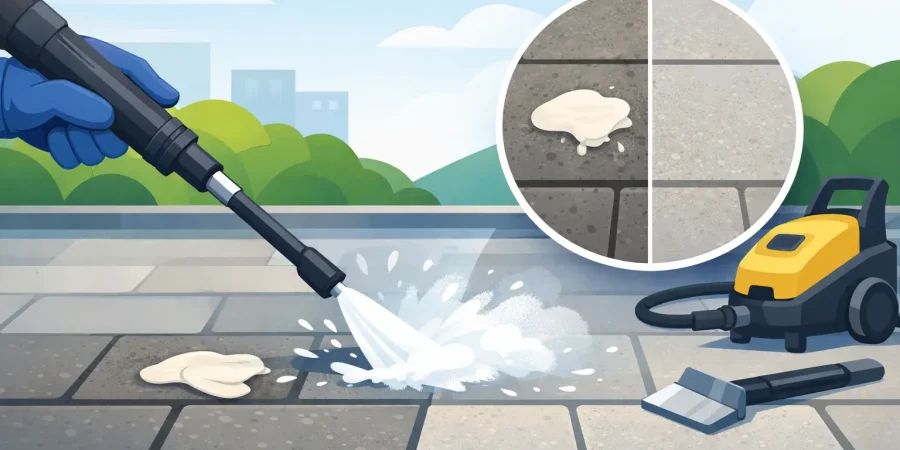
A blackened lump of chewing gum can make an otherwise tidy entrance, patio or pathway look neglected. Chewing gum removal on paving is not simply a matter of making the area look better. Old gum holds dirt, creates a sticky surface underfoot and can give visitors, tenants and customers the impression that a property is not being properly cared for.
For homeowners, landlords and businesses, the aim is straightforward: remove the gum cleanly, protect the paving and leave the surface looking cared for rather than scarred. That takes the right treatment, not a rushed blast with a pressure washer.
Why chewing gum is difficult to remove from paving
Chewing gum is made to stay soft and cling. Once it has been trodden into block paving, concrete, tarmac or textured slabs, it works its way into the small pits and joints in the surface. Sun, rain and foot traffic then turn it from a fresh sticky spot into a flat, dark mark that is far harder to shift.
The South Coast weather does not help. Damp conditions allow dirt and organic matter to settle around the gum, while dry spells bake it onto the surface. On busy paths, shopfronts, communal areas and driveway entrances, several small spots soon become a wider cleanliness problem.
Trying to scrape gum away with a blade can damage the face of paving slabs or leave visible scratch marks. Excessive pressure can chip weaker surfaces, disturb jointing sand in block paving and spread the gum residue rather than remove it. The correct approach depends on the paving type, its condition and how long the gum has been in place.
The right method for chewing gum removal paving
A professional chewing gum removal paving treatment starts with assessing the surface. There is no single setting or product that suits every patio, path or forecourt. Natural stone, concrete flags, block paving and tarmac all respond differently to heat, pressure and cleaning solutions.
The gum is first softened or treated so it can be lifted from the pores of the paving. Controlled hot-water cleaning is often effective because heat helps break the gum’s grip without relying on harsh scraping. The surface can then be rinsed carefully to remove the remaining residue and the dirt collected around it.
On more delicate paving, the pressure and temperature need to be adjusted. A result that looks good for one afternoon is not worthwhile if the cleaning process etches the surface, strips its finish or loosens the paving joints. Careful work takes slightly longer, but it protects the area and gives a more even finish.
Where block paving has lost sand during a deeper clean, resanding may be needed once the surface is fully dry. This helps lock blocks in place, supports the structure of the driveway or path and gives the finished area a neat, properly maintained appearance.
Why ordinary pressure washing can fall short
Pressure washing has a valuable place in exterior cleaning, but gum is a specific stain with specific behaviour. Cold water alone may remove the top layer while leaving a dark, sticky shadow embedded in the paving. It can also break the gum into smaller pieces that remain lodged in the texture of the surface.
There is also a risk of using too much force. A powerful jet held too close can mark concrete, lift weak pointing, remove jointing material or damage aged paving. This is particularly relevant on older patios and block paved drives where the surface may already be weathered.
The best result comes from combining suitable gum treatment with controlled cleaning equipment and an experienced eye. The difference is visible: cleaner paving, fewer dark spots and no unnecessary damage caused by an overly aggressive clean.
Where gum removal makes the biggest difference
Gum is most noticeable where people stop, queue or walk repeatedly. A clean entrance sets the tone for the rest of a property, while a stained one can make even a well-kept building feel less welcoming.
For landlords and property managers, communal paths, bin areas, parking spaces and entrances benefit from regular attention. Removing gum before it becomes heavily embedded keeps routine cleaning simpler and helps shared outdoor areas look more presentable for residents and visitors.
Small business operators may need gum removed from forecourts, paths, outdoor seating areas or doorways. These are high-visibility spaces, and customers notice them. A cleaner approach to the premises supports the standard of the business inside.
At home, gum often appears on driveways, paving near garden gates, patios and paths leading to the front door. It may only be a small mark, but when the rest of the garden has been cut back, borders tidied and paving cleaned, it stands out immediately.
Protecting the paving after treatment
Removal is only part of the job. The surrounding surface should be left clean and stable, with loose debris cleared away rather than pushed into drains or garden beds. On block paving, checking the joints after cleaning matters just as much as the stain removal itself.
Regular exterior cleaning also reduces the build-up that makes gum marks look worse. Algae, moss, traffic film and general grime darken paving over time, making individual stains harder to spot and treat accurately. A professional clean can restore the overall colour of the surface while dealing with the stubborn marks that ordinary rinsing leaves behind.
How often this is needed depends on footfall. A quiet residential patio may only need attention when a mark appears or as part of a wider seasonal clean. A commercial entrance or communal path with daily use may benefit from more frequent checks. The practical choice is to deal with gum while it is still fresh enough to remove cleanly, rather than allowing months of dirt and foot traffic to set it hard.
What to expect from a professional visit
A proper service should be clear about the condition of the paving and the finish that can realistically be achieved. Very old gum may have left a slight shadow, especially on pale or porous paving, but specialist treatment can make a major visible improvement without risking the surface.
The area should be assessed before work begins, with attention paid to drainage, loose slabs, fragile edges, existing sealants and nearby planting. The cleaning method should then be matched to the material rather than chosen simply because it is the quickest option.
For properties in Seaford, Newhaven, Peacehaven, Eastbourne and Lewes, South Coast Patio Care can combine gum removal with patio, driveway and path cleaning where needed. It is a practical way to deal with one stubborn mark while bringing the wider exterior back up to standard.
A clean surface is easier to maintain, safer underfoot and more welcoming from the moment someone arrives. If chewing gum is spoiling otherwise well-kept paving, dealing with it properly now prevents a small nuisance becoming part of the property’s permanent first impression.