
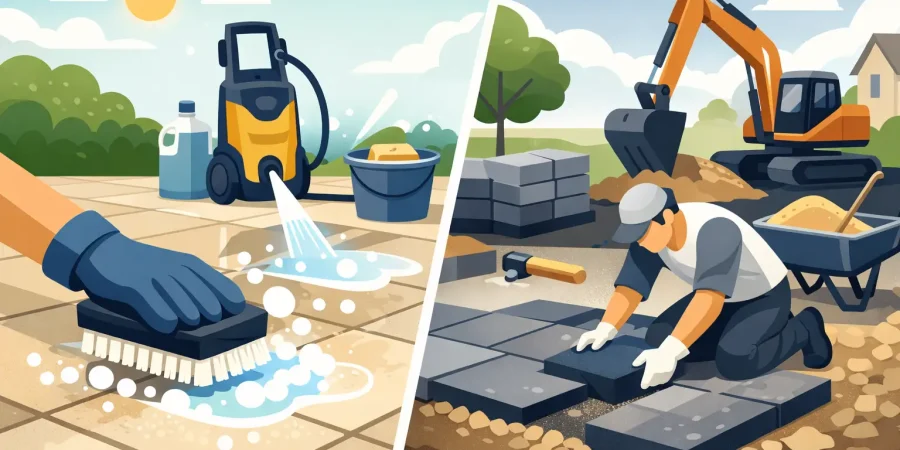
A patio can look beyond saving long before it actually is. Green algae, black spotting, ingrained dirt and faded paving can make an otherwise sound outdoor area feel neglected. When weighing up patio cleaning vs replacement costs, the key question is not simply which option is cheaper today. It is whether the existing patio has a solid structure worth restoring.
For many homes and managed properties, professional cleaning delivers the visible improvement they want at a fraction of the price of lifting and relaying the whole area. But cleaning is not a cure for broken foundations, widespread cracking or paving that has reached the end of its working life. A proper decision starts with an honest look at what is on the surface and what is happening underneath it.
What professional patio cleaning can change
Patios across the South Coast take a beating from damp weather, coastal air, fallen leaves and regular foot traffic. Porous paving holds moisture, which encourages algae, moss and lichen. The result is not only an untidy finish. It can become slippery, particularly in shaded spots, near garden gates and along paths used every day.
Professional patio cleaning removes built-up surface contamination and reveals the real condition of the paving. The difference can be dramatic: original colours become visible again, joint lines look sharper and the whole garden feels more cared for.
The right method matters. Pressure washing can be highly effective on suitable block paving, concrete and many stone surfaces, while lower-pressure or soft-washing treatments may be the safer option for delicate materials, older slabs or areas affected by organic growth. A careful clean should improve the finish without damaging the surface, washing out joints unnecessarily or driving dirt into surrounding walls and borders.
Where block paving has lost jointing sand, resanding after cleaning helps stabilise the blocks and supports a neater, longer-lasting result. That small follow-up job can make a meaningful difference to the patio’s performance as well as its appearance.
Patio cleaning vs replacement costs: the real difference
Cleaning is usually a maintenance and restoration expense. Replacement is a construction project. That is why the gap between the two can be substantial.
A professional patio clean may range from roughly £150 to £500 or more, depending on the size of the area, access, the amount of staining, the type of surface and whether treatments or resanding are needed. A small, straightforward paved area will generally cost less than a large terrace with heavy moss growth, awkward side access and extensive joint work.
Replacing a patio involves far more than buying new slabs. The old surface must be lifted and removed, waste needs disposing of, the ground may need excavating, and a new sub-base, bedding layer, edging and drainage arrangement may be required before the new paving is laid. Material choice also has a major effect. Basic concrete flags, porcelain, sandstone and premium natural stone all sit at very different price points.
As a broad guide, replacement can run from around £100 to £250 or more per square metre once labour, preparation and materials are considered. For an average-sized patio, the overall bill can quickly reach several thousand pounds. If the base has failed, drainage needs improving or access is difficult, it can rise further.
That does not make replacement poor value. A new patio can be the right long-term investment when the structure is genuinely failing. It does mean that a surface-level problem should not automatically be treated as a rebuild.
When cleaning is the sensible investment
Cleaning is often the best-value route when the slabs or blocks are largely level, intact and securely bedded. Dirt, algae and weather staining can make good paving look much worse than it is, especially after a wet autumn and winter.
Choose cleaning first when the main issues are discolouration, moss, lichen, black spots, surface grime or weeds growing through joints. These problems are frustrating, but they do not necessarily mean the patio itself has failed. If the paving is still firm underfoot and water is draining reasonably well, restoration is normally worth considering.
It is also a practical choice for landlords and property managers preparing a property between tenancies, or for homeowners who want the garden ready for summer without taking on a major building project. A clean patio lifts the appearance of the whole outside space quickly. Pair it with regular lawn care, hedge cutting or a garden tidy, and the property can look properly looked after rather than merely improved in one corner.
Cleaning does have limits. Deep rust marks, oil spills, paint and longstanding black lichen may require specialist stain treatment and may not disappear completely. Honest expectations matter. The aim is a cleaner, safer and visibly refreshed surface, not a promise that every old mark will vanish from damaged or highly porous paving.
Signs replacement is likely to be worth it
There comes a point where spending money on cleaning only improves the appearance of a patio that is no longer safe or serviceable. In those cases, replacement avoids repeated patch repairs and gives you a chance to fix the underlying cause.
Watch for several of these signs at once:
- slabs rocking, sinking or lifting across large areas
- widespread cracks, crumbling edges or broken paving units
- standing water that remains after rain because the patio has poor falls or failed drainage
- a soft, unstable base that moves underfoot
- repeated weed growth caused by extensive gaps and failed joints
- serious trip hazards around steps, thresholds or busy access routes
One loose slab does not always justify a full replacement. It may be possible to relay or repair a localised section. Equally, a patio that looks dirty but has widespread movement underneath should not be judged by appearance alone. The condition of the base is what decides whether repair, cleaning or replacement offers the better return.
Do not compare quotes like-for-like without checking the scope
A low cleaning quote and a low replacement quote can both become poor value if the work is not clearly defined. For cleaning, ask what treatment is appropriate for your surface, whether stain removal is included, how nearby walls, doors and planting will be protected, and whether block paving will be resanded afterwards.
For replacement, check whether the price includes lifting the old patio, waste removal, excavation, a properly compacted sub-base, drainage, edging and all materials. A quote that only covers laying slabs may look attractive until the preparation costs are added later.
The best contractor will explain what they can realistically achieve. They should not push replacement simply because it is the larger job, and they should not promise that cleaning will solve structural issues it cannot fix. A straightforward assessment saves money and disappointment.
How to make a cleaned patio last longer
A patio does not need constant attention, but it does benefit from regular care. Keeping leaves, soil and garden debris off the surface reduces the moisture that algae and moss need to thrive. Trimming back overhanging plants improves airflow and lets the area dry more quickly after rain.
Periodic professional cleaning is usually easier and more cost-effective than allowing years of growth and staining to build up. For block paving, keeping joints in good order helps prevent movement and reduces the gaps where weeds establish themselves. If drainage is poor, address that early rather than repeatedly cleaning a surface that stays damp.
At South Coast Patio Care, the focus is on practical results: assessing the surface properly, using an appropriate cleaning method and leaving the area tidy when the job is finished. That approach matters whether the patio is the centre of a family garden, a rental property’s outdoor space or the entrance to a small business.
The better choice is the one that matches the patio’s condition
If your existing paving is sound, cleaning can be one of the most cost-effective ways to make an outdoor space safer, brighter and more inviting. If it is unstable, badly broken or holding water because the foundation has failed, replacement may prevent a cycle of short-term fixes.
Before committing to a major expense, have the patio assessed for structure as well as appearance. A good clean may reveal a surface worth keeping for years. And if replacement is needed, you can move ahead knowing it is based on the condition of the patio, not just the dirt on top.