
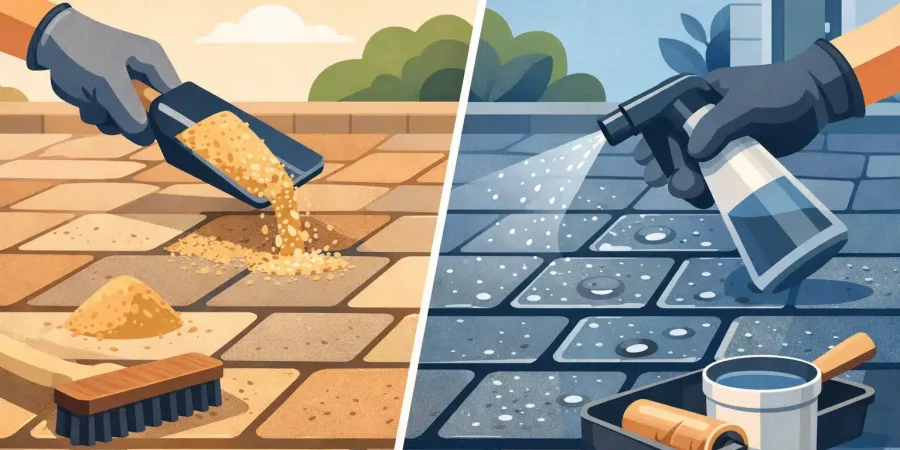
A freshly cleaned block-paved drive can look excellent for a few weeks, then the gaps between the blocks start to stand out. This is where resanding vs sealing block paving becomes the key decision. Both treatments can improve the look and performance of a driveway or patio, but they do different jobs. Choosing the wrong one, or applying either at the wrong time, can leave you paying for a finish that does not last.
For most properties, the priority is simple: clean, stable paving with neat joints, fewer weeds and a finish that suits the surface. The right treatment depends on the age and condition of the blocks, how the area is used and whether the paving has been cleaned recently.
What resanding block paving actually does
Block paving is designed to work as an interlocking surface. The kiln-dried jointing sand brushed into the gaps is not there only to make the drive look tidy. It helps lock each block against its neighbours, reducing movement when vehicles, foot traffic and changing weather put pressure on the surface.
Over time, jointing sand is lost through rain, sweeping, tyre movement and pressure washing. Moss and weeds can also work into open joints. After a thorough clean, a large amount of old sand is often removed as well. If the joints are left empty, blocks can begin to move, edges can loosen and water can find its way more easily beneath the paving.
Resanding replaces this lost material. Once the surface is fully dry, clean kiln-dried sand is worked into the joints until they are properly filled. It is a practical maintenance treatment, particularly for driveways and paths that have been pressure washed or show visible gaps between blocks.
Resanding will not change the colour of the blocks or create a sheen. Its value is in restoring stability and giving the surface a clean, even appearance. For many well-laid driveways, this is all that is needed.
What sealing block paving does
Sealing is a protective coating applied over clean, dry block paving. Depending on the product and finish chosen, it can help reduce water absorption, slow down staining and make regular maintenance easier. Some sealants provide a subtle natural finish, while others deepen the block colour or leave a more noticeable sheen.
A quality sealer can be useful on paving exposed to frequent traffic, oil drips, leaf staining or damp conditions. It can also help retain jointing sand, provided the joints have first been correctly filled and the surface has been prepared properly.
Sealing is not a substitute for sound paving, however. It will not repair loose blocks, cure poor drainage or hide damaged areas. If the joints are empty, the blocks are rocking or the surface has sunk, those issues need attention before any protective coating is considered.
It also requires more care than resanding. The paving must be genuinely clean and completely dry. Trapped moisture, dirt, algae or cleaning residue can affect adhesion and leave an uneven result. This is why sealing directly after a wash is rarely the right approach, especially during changeable South Coast weather.
Resanding vs sealing block paving: which is right for you?
Resanding is usually the better choice when the paving is structurally sound but the joints are low, patchy or empty. It is a straightforward way to finish a professional clean properly and help the blocks stay firmly in place. It is also the more affordable option when the main aim is to restore a neat, cared-for appearance.
Sealing may be worthwhile where the paving is in good condition and the owner wants added protection or a particular finished look. A driveway outside a busy home, rental property or small business can benefit from easier cleaning and greater resistance to everyday marks. But it is an optional upgrade, not something every block-paved surface needs.
The best answer is often both treatments, completed in the correct order. First, clean the paving thoroughly. Next, allow it to dry fully. Then resand the joints. Once the sand has settled and the surface meets the sealer manufacturer’s requirements, a suitable sealant can be applied if extra protection is wanted.
That order matters. Sealing before the joints are correctly filled can compromise the result. Resanding after sealing can also leave loose sand sitting on top of the coating rather than properly locking into the joints.
Signs your paving needs resanding
You do not need to wait until blocks have visibly shifted to act. A close look at the joints often tells the story. Resanding should be considered when you notice:
- clear gaps or low levels of sand between blocks
- weeds repeatedly appearing in the joints
- blocks that move slightly underfoot or beneath tyres
- sand washed out after cleaning or heavy rainfall
- loose edge blocks or sections beginning to spread
Weeds are frustrating, but they are usually a symptom rather than the main problem. Seeds settle in open joints, where moisture and debris have collected. Properly filled joints make it harder for weeds to take hold, although no outdoor surface can be guaranteed completely weed-free.
When sealing may not be the sensible option
A sealer is not automatically a better finish. On older paving with mixed repairs, faded blocks or areas that have absorbed previous treatments unevenly, a coating can exaggerate the differences rather than disguise them. Gloss finishes can also look out of place on certain properties and may show tyre marks, dust or patchiness more readily.
Drainage is another consideration. Standard block paving is typically intended to let surface water pass through the joints and away through the construction beneath. Applying the wrong product, or applying too much of it, can affect how the surface behaves. Permeable block paving needs particular care and a compatible treatment, if it is sealed at all.
If there are frequent oil leaks on a drive, sealing may help make future spills easier to manage, but it cannot make them disappear. Existing stains need suitable treatment before sealing. Likewise, sealant will not stop algae growing in permanently shaded, damp areas unless the underlying cause is addressed through regular cleaning and better light or drainage where possible.
Why preparation determines the finish
The difference between a driveway that looks properly restored and one that quickly turns patchy usually comes down to preparation. Pressure washing can remove years of black spotting, algae, dirt and embedded debris, but it must be controlled. Too much pressure, held too close, can damage the surface or blast out unnecessary amounts of jointing sand.
After cleaning, the area needs time to dry. This is especially important before resanding and essential before sealing. Damp joints do not accept kiln-dried sand effectively, while moisture beneath a sealant can lead to whitening, hazing or poor adhesion.
A professional assessment also picks up issues that a surface clean cannot solve, such as failed edging, settlement, cracked blocks or poor falls that leave standing water. Addressing these problems first protects the value of any cleaning, resanding or sealing work that follows.
A practical choice for drives, patios and paths
For a block-paved driveway that has just been cleaned, resanding is often the sensible finishing step. It restores the joints, supports the blocks and gives the whole area a sharper appearance without altering the natural character of the paving.
For a patio or drive that is already stable, clean and dry, sealing can offer an extra layer of protection where it genuinely suits the surface and the expected use. A natural-look sealer is often preferable for homeowners who want a tidy, refreshed result without a high-gloss appearance.
South Coast Patio Care takes a practical approach: assess the condition of the paving, clean it carefully and recommend the treatment that will give the best lasting result, rather than adding work a surface does not need.
The most useful next step is to look beyond the dirt. If the joints are low, start with resanding. If the paving is sound and you want ongoing protection after proper preparation, ask whether sealing is suitable. A well-finished drive should look cleaner, feel more secure and stay easier to maintain long after the washdown is complete.